
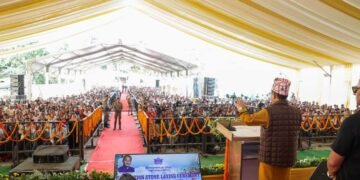




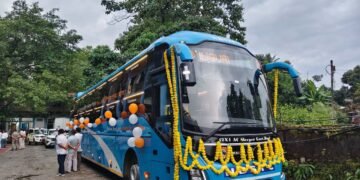






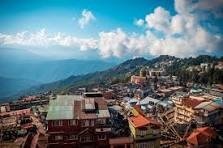

Siliguri, September 21, 2026: Traffic has started moving on the newly opened section of the Darjeeling More Road Over Bridge (ROB) in Siliguri, bringing an important change to one of the city’s busiest and most strategically significant traffic points.
The section was opened to the public on September 20, 2026, following the inauguration ceremony at Darjeeling More. The opening comes after months of construction-related disruption in the area, where road capacity had been affected by the ongoing elevated-corridor project.
For Siliguri, however, the significance of the new ROB goes beyond a single flyover.
Darjeeling More sits at an important junction connecting traffic moving towards Darjeeling, Kalimpong and Sikkim, while also serving traffic entering and leaving Siliguri. The location’s importance means that improvements here can have implications for local commuters as well as tourists, airport passengers, commercial vehicles and long-distance travellers.
Why Darjeeling More is so important for Siliguri traffic
Darjeeling More has long been regarded as one of Siliguri’s major traffic bottlenecks.
The junction is located in the northern part of the city and serves as an important entry point to Siliguri. It also connects routes carrying traffic towards the hills and the wider North Bengal region.
The problem becomes particularly visible during peak hours and the tourist season, when local traffic mixes with vehicles travelling towards Darjeeling, Kalimpong, Sikkim and other destinations.
The new elevated infrastructure is designed to separate a portion of through traffic from surface-level movements, potentially allowing vehicles to cross the busy junction with fewer interruptions.
The larger project is a four-lane corridor running from Balason in Matigara to Sevoke Army Cantonment, incorporating elevated sections and the Darjeeling More ROB. The project was conceived specifically to address congestion along this important corridor.
How the ROB could help ease Siliguri traffic
The most immediate potential benefit is better traffic flow through Darjeeling More.
Instead of all vehicles having to negotiate the same surface-level junction, the elevated carriageway provides a dedicated route for through movement.
This could be particularly useful for vehicles that are simply passing through the area rather than stopping at Darjeeling More.
For local commuters, the benefit could come from reduced interaction between through traffic and local movements around the junction.
However, the full impact will depend on how traffic behaves after the opening and how the remaining portions of the elevated corridor are completed.
The entire Balason–Sevoke corridor is currently targeted for completion by March 2027.
What could this mean for Bagdogra Airport traffic?
This is where the project becomes particularly interesting for travellers.
Bagdogra Airport is one of the principal gateways for travellers heading towards Siliguri, Darjeeling, Kalimpong and Sikkim. The road network around Siliguri therefore plays an important role in connecting air passengers with the Himalayan tourism destinations of the region.
Darjeeling More is connected to the wider road network serving Bagdogra and the hills. Previous reporting on the elevated-corridor project has specifically highlighted smoother movement for traffic travelling between Bagdogra, Darjeeling and Siliguri.
That means the new ROB could potentially make the airport-to-hills journey more predictable by reducing one major bottleneck along the broader route.
But there is an important caveat
The Darjeeling More ROB does not eliminate traffic congestion on the entire route to Bagdogra Airport.
Travellers can still encounter congestion at other junctions and road sections between the airport and Siliguri.
So, rather than saying “the flyover will solve Bagdogra Airport traffic,” it is more accurate to say that the ROB removes or reduces one important bottleneck on the wider airport–Siliguri–hills travel network.
That distinction makes the story more credible.
A potentially important improvement for Sikkim travellers
For people travelling between Siliguri and Sikkim, the Darjeeling More improvement could also be significant.
Siliguri functions as an important gateway for road travel towards Sikkim. Vehicles coming from the hills and Sikkim also pass through the wider Siliguri road network before continuing towards destinations such as Bagdogra Airport, NJP and other parts of North Bengal.
The wider NH10 and Balason–Sevoke infrastructure projects are intended to improve connectivity across this network. Earlier project descriptions specifically linked the corridor with improved movement between Siliguri and the routes towards Kalimpong and Sikkim.
For Sikkim-bound tourists, this could mean one less major congestion point on the journey after arriving in Siliguri.
For local residents, taxis, tourist vehicles and commercial operators, smoother movement through a major junction could also make everyday journeys more predictable.
Why this matters for Sikkim tourism
A large proportion of visitors to Sikkim arrive through the Siliguri–Bagdogra–NJP gateway before continuing towards the hills.
That makes Siliguri’s road infrastructure an important part of the overall tourism experience.
A tourist may have a smooth flight into Bagdogra but still face delays once the road journey begins.
Improving bottlenecks around Siliguri therefore has the potential to benefit not only local commuters but also the broader tourism circuit connecting:
Bagdogra → Siliguri → Darjeeling / Kalimpong / Sikkim
The Government of Darjeeling’s own tourism access information identifies Bagdogra as the nearest airport for Darjeeling and Siliguri as the principal road gateway to the hills.
Local commuters could be among the biggest beneficiaries
While tourists may notice the ROB during their journey through Siliguri, the people who use the corridor regularly could see the most practical benefits.
This includes:
- Daily office commuters
- Students travelling to schools and colleges
- Hospital patients and attendants
- Local taxi and cab operators
- Bus passengers
- Goods and delivery vehicles
- Traders and businesses
- Tourists travelling towards the hills
Earlier statements around the wider corridor project highlighted potential benefits for students, patients, traders, tourists and local residents through improved traffic movement.
For people who travel through Darjeeling More every day, even greater consistency in journey times could be more valuable than simply reducing the length of an individual trip.
The bigger picture: this is only one part of the corridor
The September 20 opening should therefore be viewed as one stage of a much larger infrastructure project.
The Balason–Sevoke corridor includes the elevated highway infrastructure around Darjeeling More and is designed to improve movement along a much wider stretch of the Siliguri region.
The full corridor is targeted for completion by March 2027.
Once the remaining works are completed, the cumulative impact could be considerably greater than what can be assessed from the opening of a single carriageway.
For now, the key development is simple:
Traffic has started moving on the newly opened Darjeeling More ROB.
And for Siliguri, Bagdogra-bound travellers, Darjeeling tourists and people travelling towards Sikkim, that means one of the region’s most closely watched traffic bottlenecks has entered a new phase.